Twenty years ago I hauled two heavy record bags to my first gigs. Today I walk into the same venues with a USB stick in my pocket. The transformation of our trade has been nothing short of revolutionary - and yet some things have stayed exactly the same.
The vinyl era
In the early 2000s vinyl was still king. Every week I went to the record shop - Fat Beats, Rush Hour, Clone - to flick through the new releases. It was a ritual. You listened to tracks in the shop, made mental notes, and if you were lucky you went home with five, maybe ten new records.
Those records were precious. Not just in money - an import easily cost twenty euros - but in space too. My bedroom was full of crates. Going to a gig meant doing sums: which 60 records do I take? What if I forget something? That fear, of not having that one track on you, is something new DJs will never know.
The physical side of the job
Playing vinyl was hard work. Hauling the record bags, setting up the decks, checking the needles were in order. And then the mixing itself: beatmatching by ear, fingers on the record to make tiny corrections. It was physical, tactile, and incredibly satisfying.
But it was fragile too. I have seen records warp in hot clubs. I have seen needles jump from the vibration of the bass rig. One spilled drink over your record bag and your whole collection was finished.
The digital revolution
Somewhere around 2006 everything started shifting. Serato appeared, Traktor got popular, and suddenly you could have your entire record collection on a laptop. Reactions in the scene were... mixed.
"Laptop DJs aren't real DJs!" - Literally everyone in 2007
I will admit it: I was sceptical. For years I had trained to beatmatch by ear, to feel the groove of a record. And now there was software that could take all of that over? It felt like a betrayal of the craft.
Making the switch
I switched anyway, around 2010. Not because I embraced the technology, but out of practical necessity. Clubs had fewer and fewer decent turntables. Some had no record players at all any more. And those record bags... my back was done with them.
The first months on digital felt strange. Almost too easy. But along the way I discovered new possibilities. Hot cues, loops, instant access to thousands of tracks. My sets got more dynamic. I could act on requests I would have had to turn down before.
Streaming changes everything
If the move to digital was a revolution, streaming is an earthquake. Spotify, Beatport, SoundCloud - suddenly everybody has access to all the music, anywhere, any time.
The disappearance of the record expert
A DJ used to be valuable because of their collection. You had tracks other people did not have. You knew about labels, producers, secret white labels. That knowledge was your capital.
Now anybody can download the top 100 of any genre in five minutes. The exclusivity is gone. And that has changed the job fundamentally. It is no longer about what you have - it is about what you do with it.
The new reality
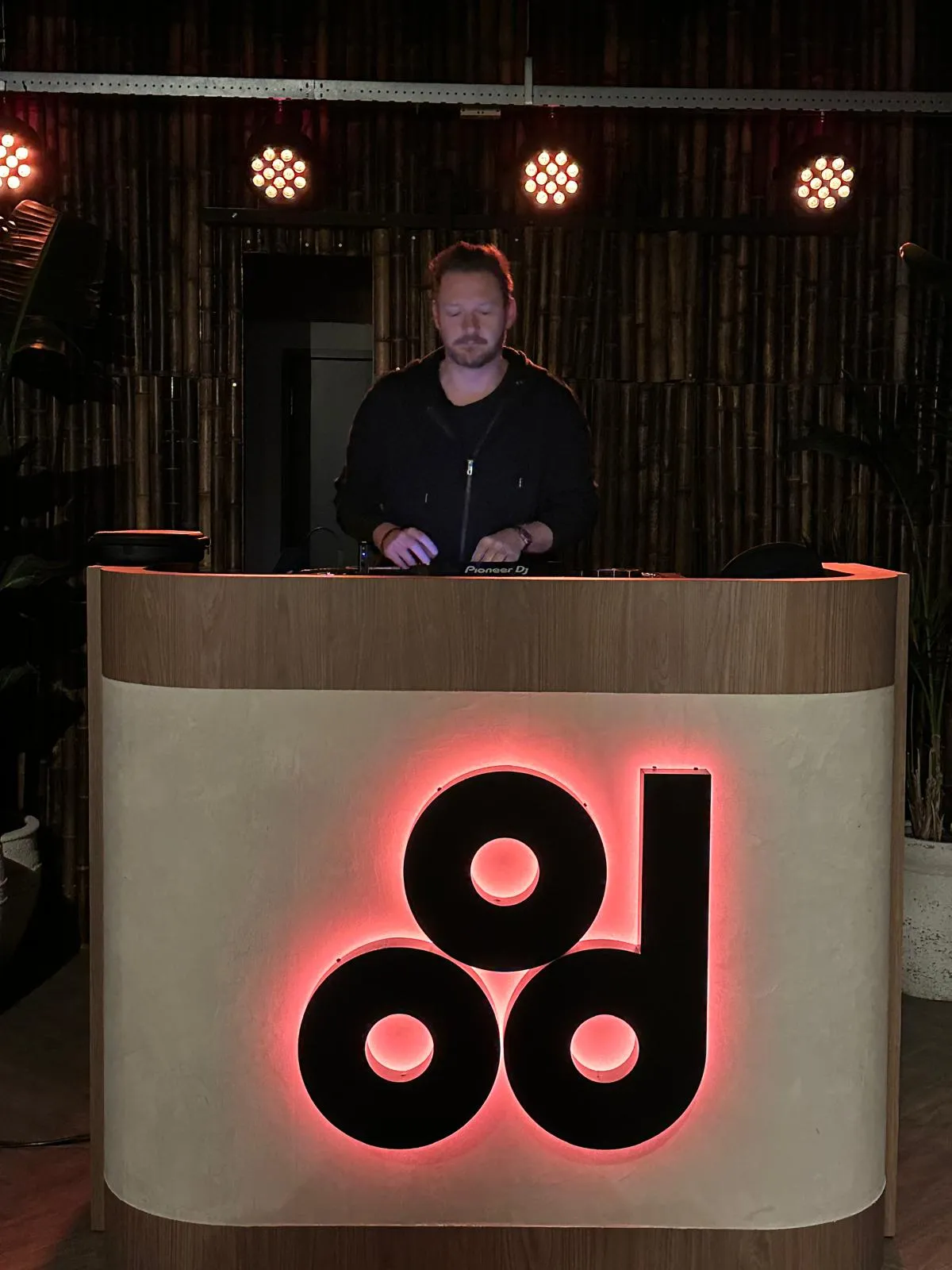
These days I play from a USB stick holding more music than I could have collected in twenty years of vinyl. I use Rekordbox to manage my collection, sync now and then without shame, and focus on what actually counts: building a set that works.
Modern DJ setup
My current workflow: discover new music via Spotify and SoundCloud, buy on Beatport or Bandcamp, analyse in Rekordbox, and export to USB. The whole process that used to take weeks now takes me an evening.
Social media: blessing and curse
Instagram, TikTok, YouTube - social media has made and broken DJ careers. It is an entirely new dimension of the job that did not exist twenty years ago.
The upside
I can upload a mix now and get feedback from people all over the world within hours. I can connect with other DJs, promoters, labels.
The downside
But social media has broken something too. The pressure to produce content constantly is immense. I see young DJs who are busier with their TikTok than with their music. Who invest more in their Instagram aesthetic than in their DJ skills.
And then there are the fake DJs. People lip-syncing to mixes, pretending to play while everything is pre-programmed. Social media rewards performance, not authenticity. That is a problem.
What has stayed the same
After all this complaining about change, I have to be honest: the core of the job is exactly the same as it was twenty years ago.
Reading the crowd
No technology can read a crowd. No algorithm knows when to drop, when to bring it down, when to reach for a classic. That feeling in your gut, the intuition you develop over hundreds of gigs - that is irreplaceable.
I still stand behind the decks and scan faces. I watch who is dancing, who is talking, who is heading for the bar. I feel the energy in the room. And I make choices on that basis - just like in 2005.
Managing energy
Building a good set is timeless. Start calm, build, create peaks and troughs, and finish with a bang. That is not technology. That is psychology. That is people work.
"The tools change, but the job stays the same: giving people a night they will not forget." - My motto after 20 years
Making a connection
In the end it is all about connection. Between me and the music. Between me and the crowd. Between the people on the dancefloor. Those magic moments where a whole room celebrates one track together - that is timeless. It happens with vinyl, with CDJs, with controllers. The medium does not matter.
What the future holds
AI-generated music, virtual reality clubs, algorithms building playlists - the next twenty years promise even wilder changes. And you know what? I am ready for it.
Not because I am going to chase every trend. But because I have learned that adapting is not a betrayal of the craft. It is survival. It is growth. The DJs who refused to go digital in 2005 are not playing any more. The ones who adapted, evolved, and combined the best of old and new - they are still behind the decks.
Advice after two decades
If I can pass one thing on to young DJs, it is this:
- Embrace technology - but never let it be an excuse to ignore the fundamentals
- Keep discovering music - algorithms are handy, but digging stays essential
- Invest in your skills - followers disappear, craft remains
- Never forget the crowd - they are the reason we exist
- Be authentic - in a world of fake, being real is your biggest asset
Conclusion
Twenty years ago I could not imagine ever playing without vinyl. Today I cannot imagine ever going back. The world changes, the job changes, we change.
But when I stand behind the decks at Holland Casino tonight, and I see the first people coming to the dancefloor, and I feel that tension of "which track do I put on now?" - that is exactly the same feeling as my very first gig. The butterflies, the adrenaline, the responsibility.
That is what makes a DJ. Not the gear. Not the technology. But the drive to bring people together through music. And that, my friends, has not changed for one second in twenty years.